



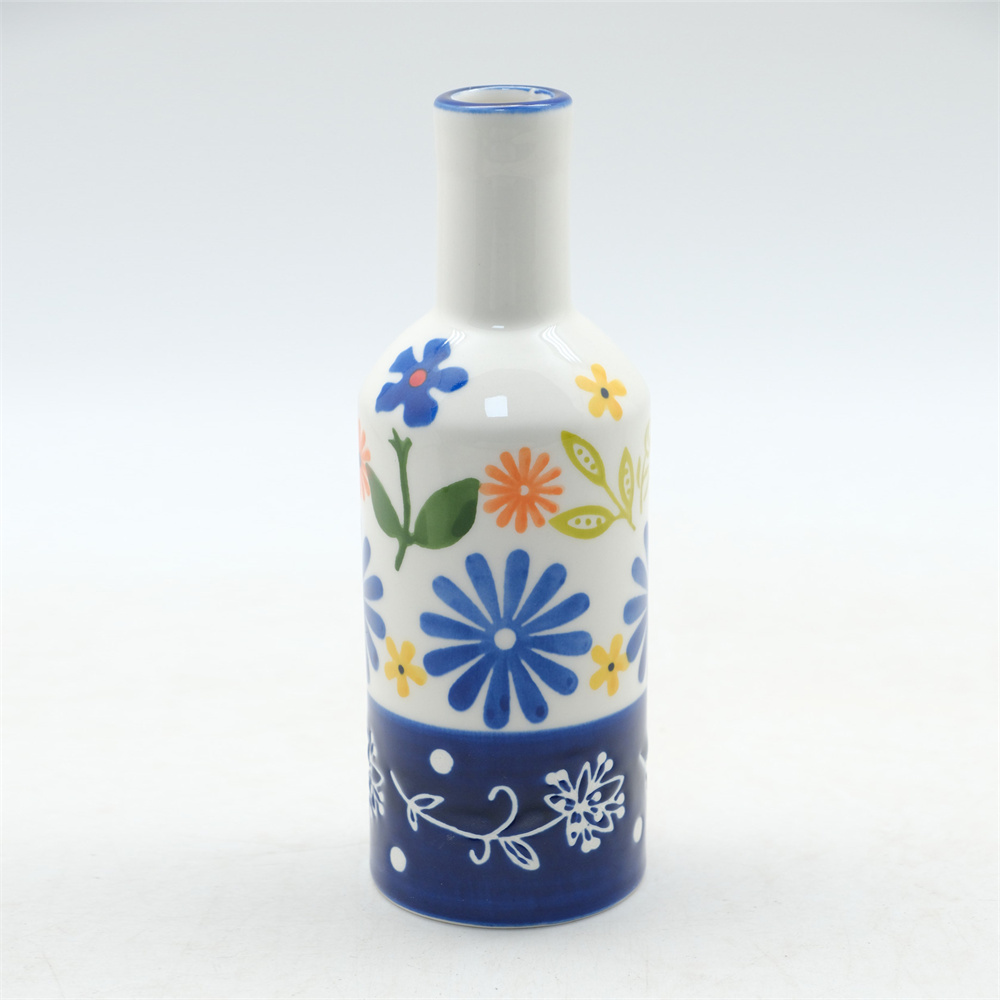
Custom Hand-Painted Ceramic Oil and Vinegar Bottles - Handmade Stoneware from China Factory Suppliers
Material Safety
When choosing ceramic oil and vinegar bottles, the safety of the material is of vital importance. Ceramics used for food containers should ensure that they are non-toxic and harmless, and do not contain harmful substances such as lead and cadmium. Therefore, when choosing, you should give priority to products marked with "food safety" or "lead-free", which is not only related to health, but also a manifestation of responsibility to your family.
Ergonomic Design
In addition to safety, the design of ceramic oil and vinegar bottles is also an important consideration. Experts suggest that the design of the bottle should be ergonomic and easy to hold and operate. For example, the shape of the bottleneck should be easy to pour out the liquid, and the design of the bottle cap should be able to seal well to prevent leakage. In addition, the size of the bottle should match the amount of oil and vinegar used in daily life, avoiding being too large or too small to cause inconvenience in use.
Kitchen Aesthetics
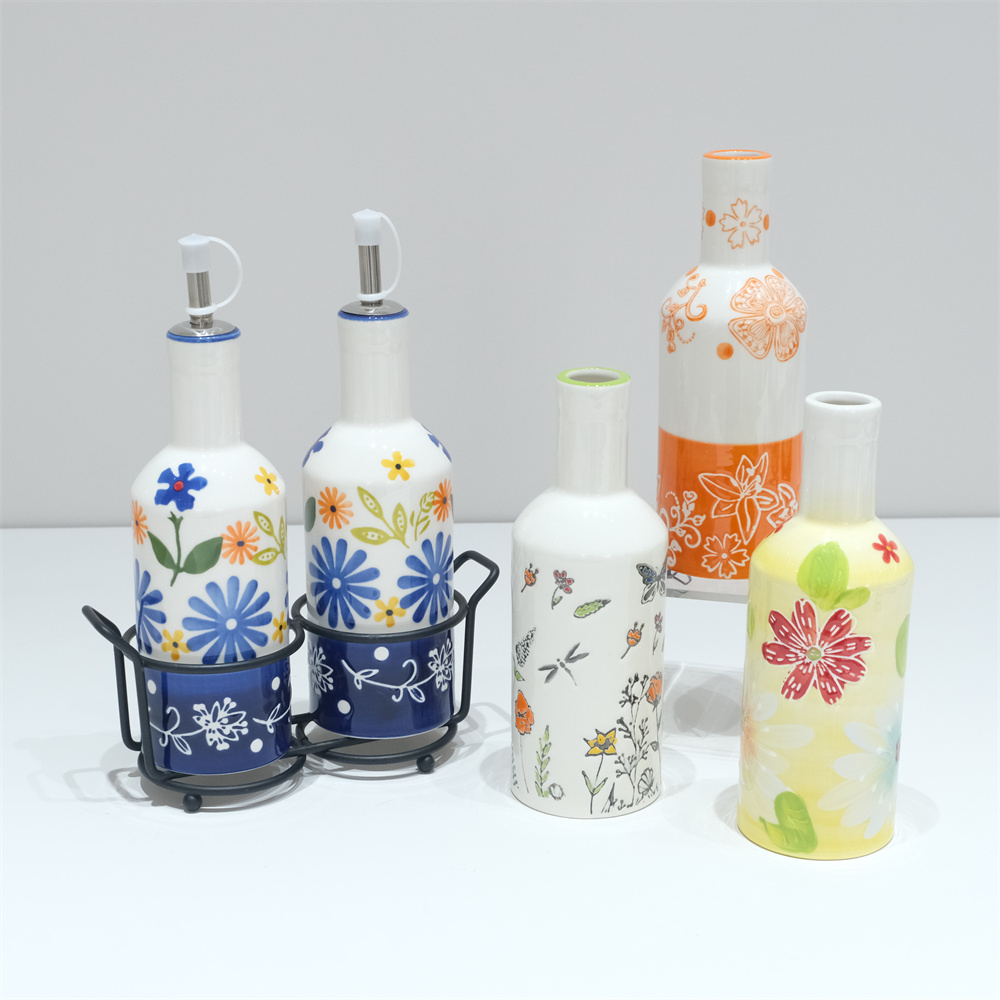
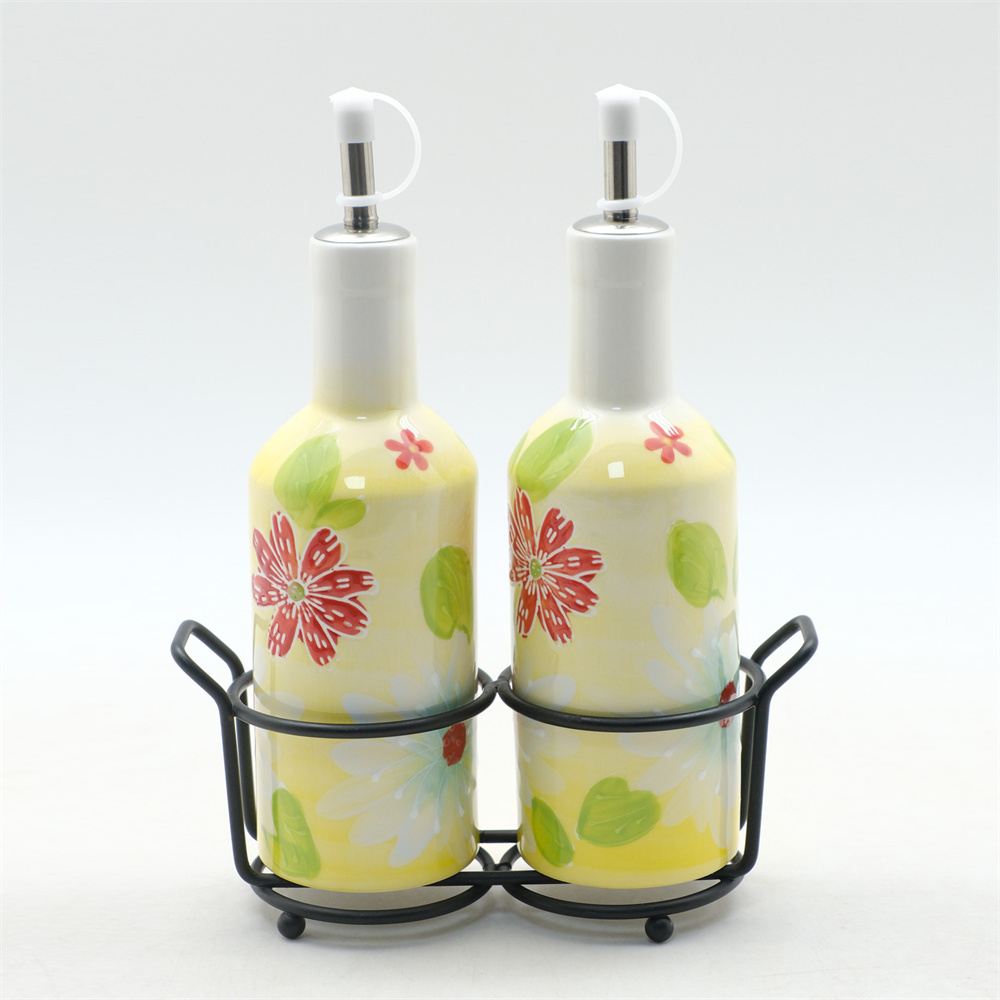
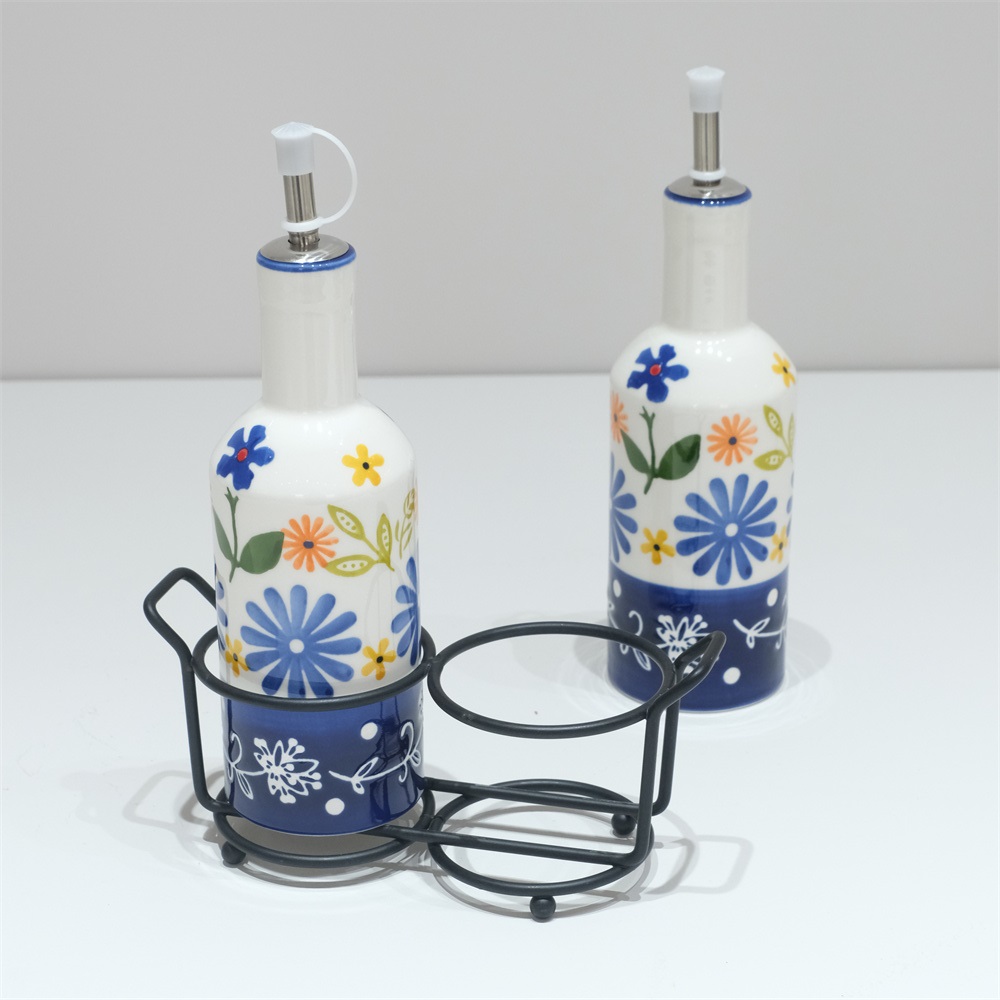
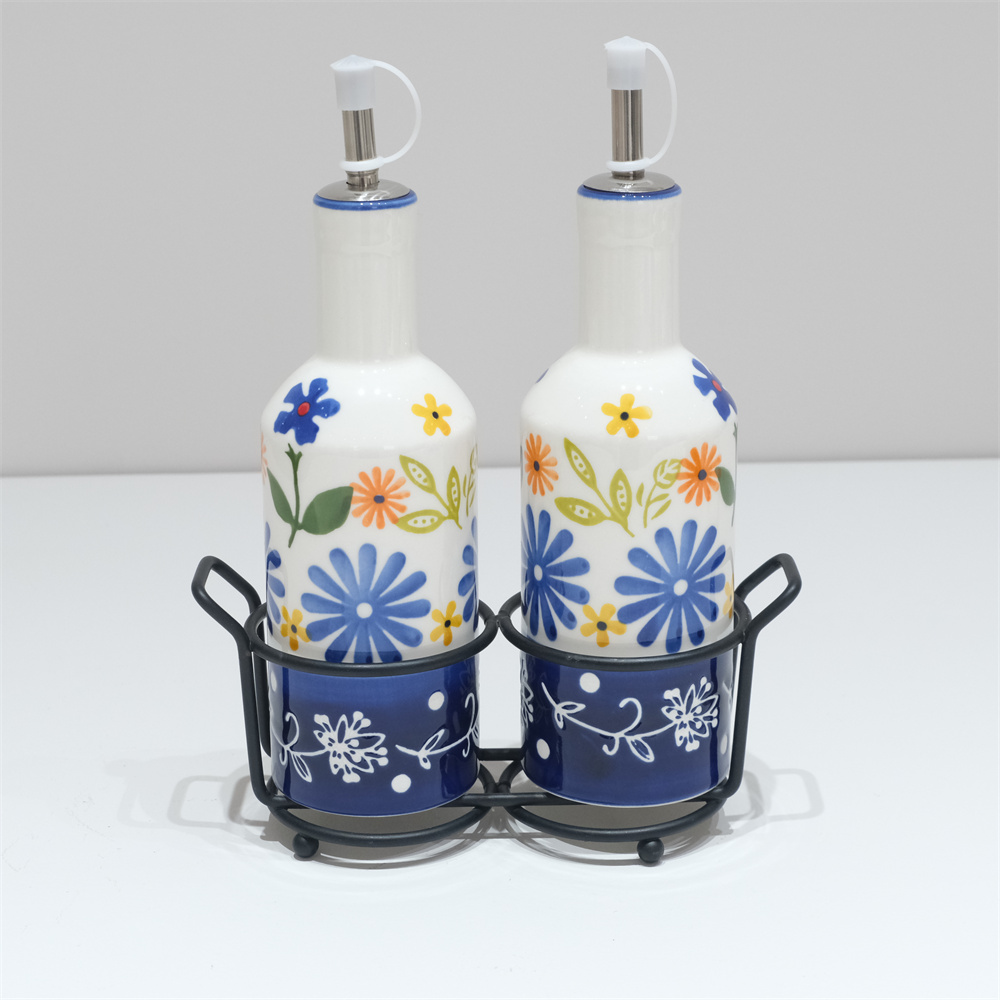
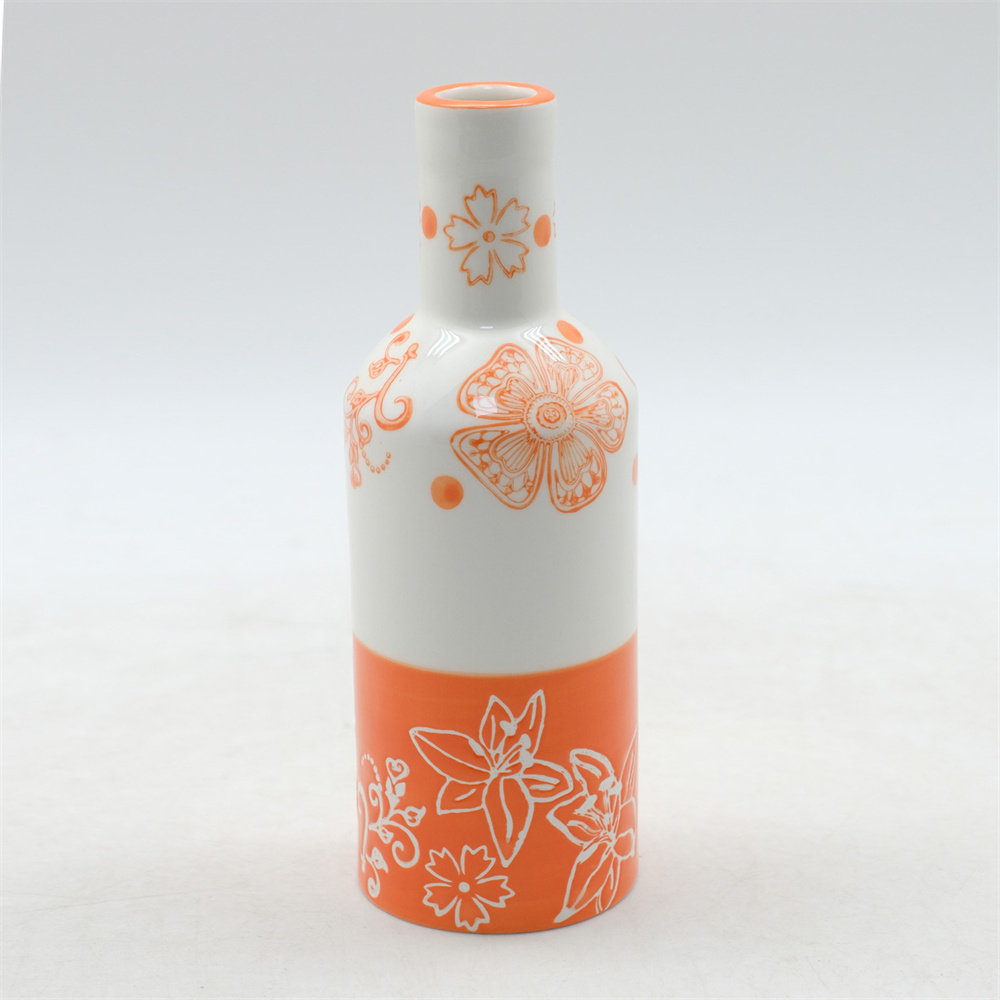
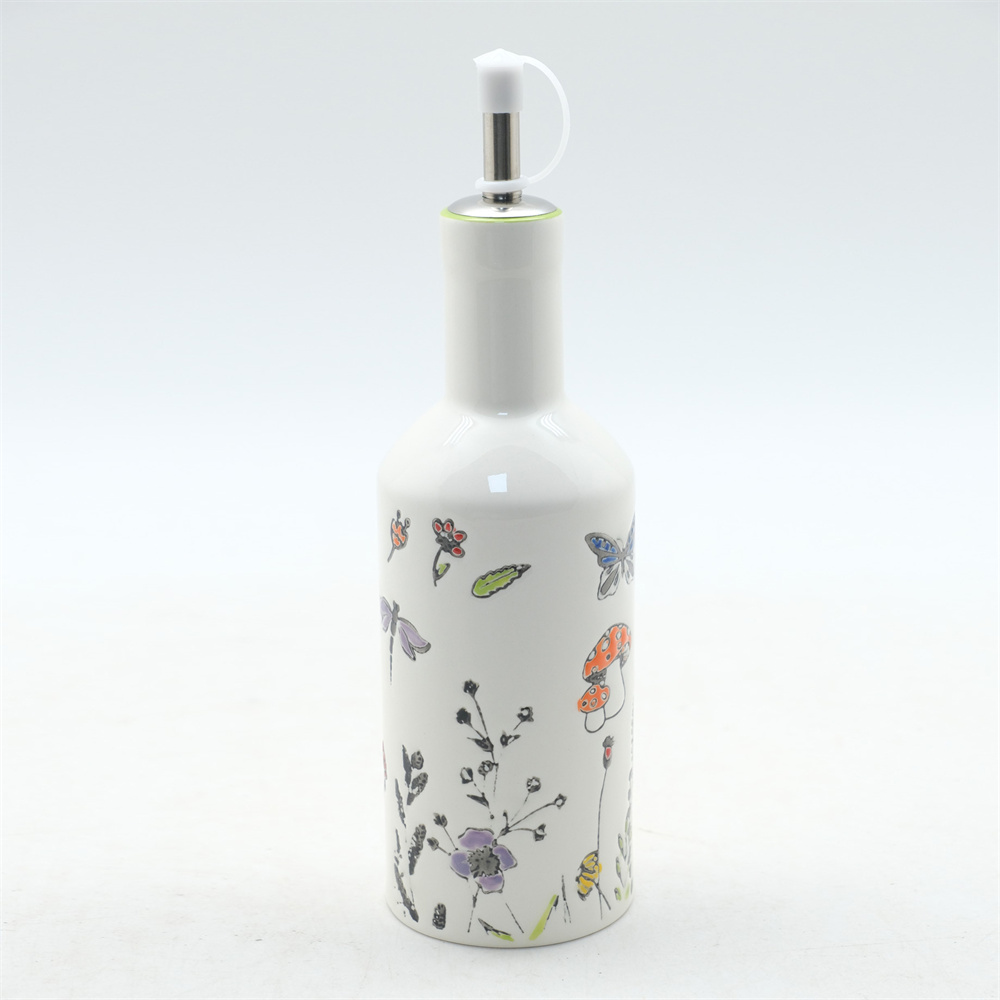
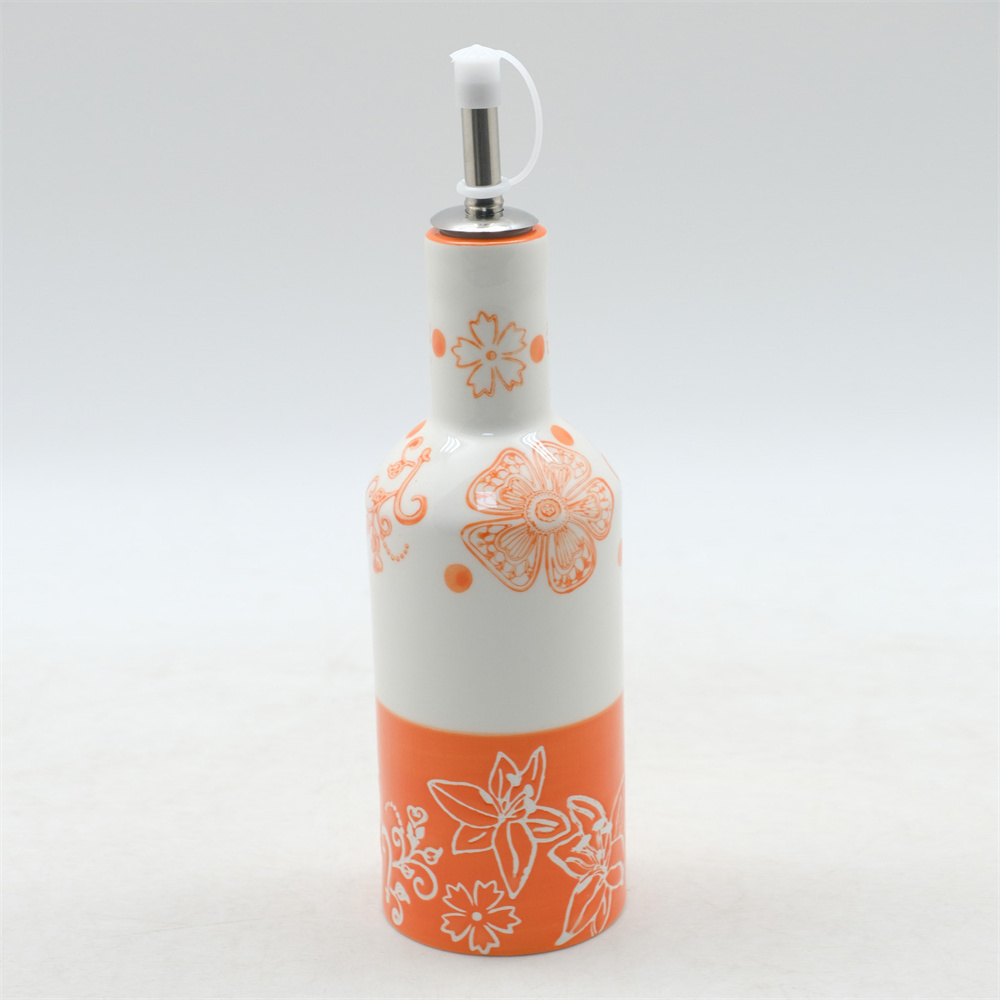
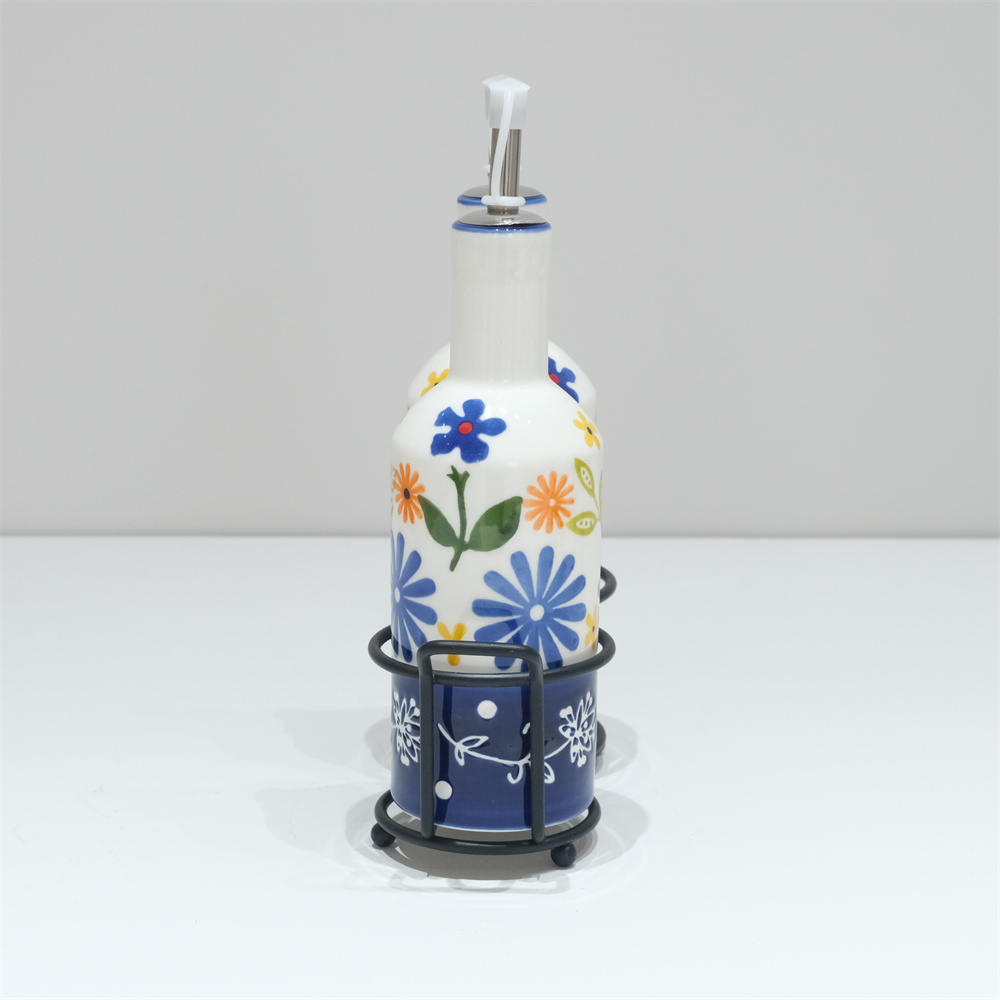
Aesthetics is also a consideration when choosing. The appearance color, pattern and shape of the ceramic bottle should be coordinated with the overall style of the kitchen. Choosing a ceramic oil and vinegar bottle that is consistent with the kitchen decoration style can not only enhance the overall beauty of the kitchen, but also reflect the owner's taste. Simple-style kitchens are suitable for choosing oil and vinegar bottles with simple shapes and single colors, while country or retro-style kitchens can choose models with retro patterns.
Functionality & Eco-Friendliness
Functionality is another criterion for judging the quality of ceramic oil and vinegar bottles. Some high-end products incorporate anti-drip technology into their designs, effectively avoiding the embarrassment of oil and vinegar spilling during use. Environmental protection is also an important consideration under the current consumer trend. Choosing ceramic oil and vinegar bottles made of environmentally friendly materials and recyclable can not only reduce the impact on the environment, but also reflect consumers' support for a sustainable lifestyle.

Quality Over Price
Although price is one of the factors that consumers care about, experts remind that they should not pursue low prices too much and ignore the quality and safety of the product. Investing in ceramic oil and vinegar bottles with reliable quality, reasonable design and beautiful appearance is an economical choice in the long run.
Frequently Asked Questions
Why is material safety important for ceramic oil and vinegar bottles?
Material safety is crucial because food containers must be non-toxic and harmless. Quality ceramic bottles ensure that no harmful substances, such as lead or cadmium, leach into your oil and vinegar, protecting your family's health.
What design features should I look for in a ceramic dispenser?
Look for ergonomic designs that are easy to hold and operate. Key features include a bottleneck shaped for smooth pouring, a well-sealed cap to prevent leakage, and a size that matches your daily usage needs.
How do I choose a ceramic bottle that matches my kitchen style?
Select a bottle design that coordinates with your kitchen decor. For instance, simple shapes and solid colors work best for modern, minimalist kitchens, while bottles with retro patterns fit country or vintage styles.
What is anti-drip technology in ceramic bottles?
Anti-drip technology is a design feature incorporated into high-end ceramic bottles that prevents oil and vinegar from spilling or dripping down the sides of the bottle during use, keeping your kitchen clean.
Are ceramic oil and vinegar bottles eco-friendly?
Yes, ceramic bottles made from natural, environmentally friendly, and recyclable materials are sustainable choices that reduce environmental impact compared to single-use plastic containers.
Is it worth investing in higher-priced ceramic bottles?
Yes, investing in reliable quality, safety, and proper design is more economical in the long run. Extremely cheap options may compromise on material safety and durability.